Category: MA

  • OpenAI’s Sam Altman warns of AI voice fraud crisis in banking

    OpenAI’s Sam Altman warns of AI voice fraud crisis in banking

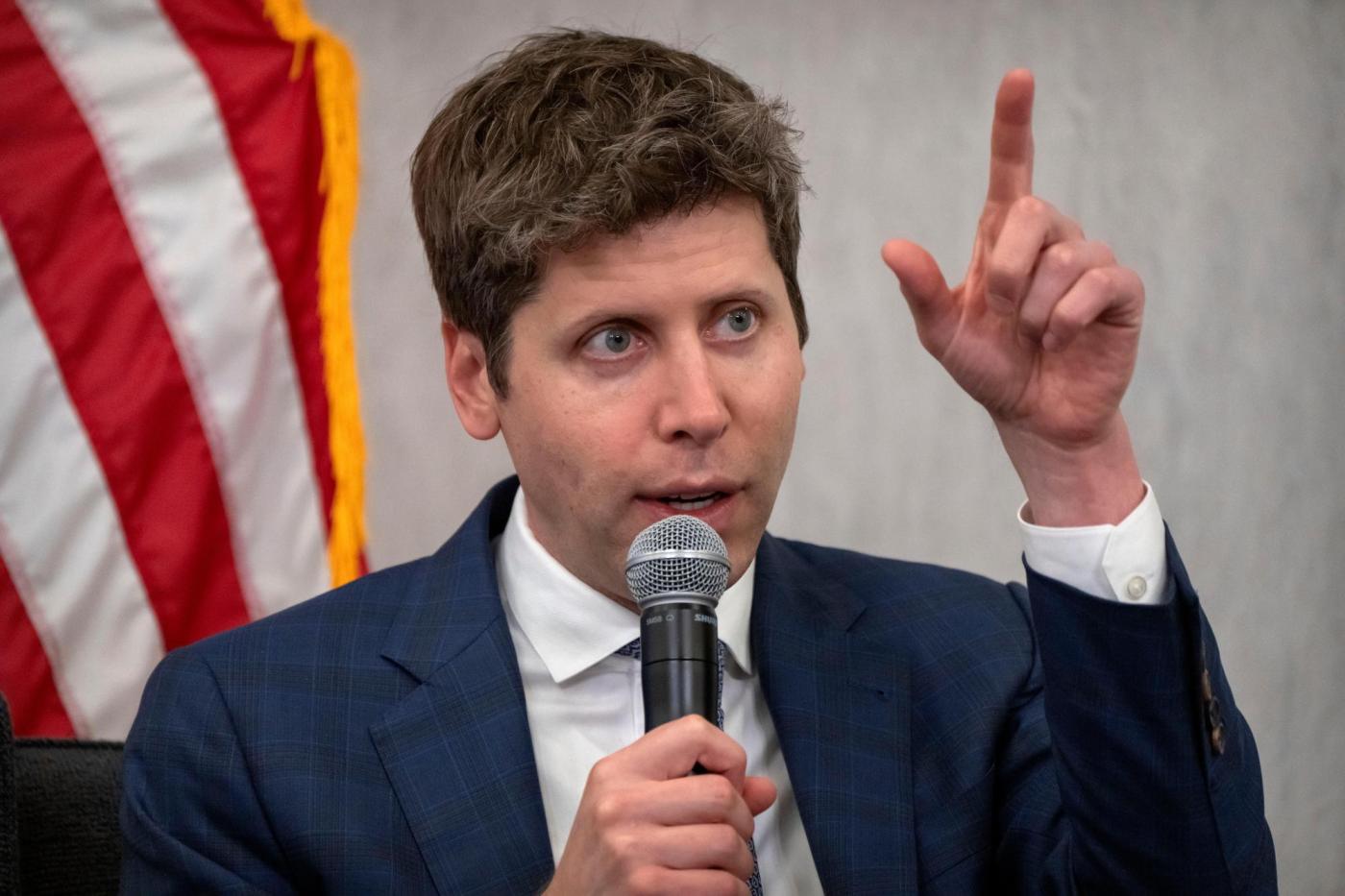
    WASHINGTON (AP) — OpenAI CEO Sam Altman warned the financial industry of a “significant impending fraud crisis” because of the ability of artificial intelligence tools to impersonate a person’s voice to bypass security checks and move money.

    Altman spoke at a Federal Reserve conference Tuesday in Washington.

    “A thing that terrifies me is apparently there are still some financial institutions that will accept the voiceprint as authentication,” Altman said. “That is a crazy thing to still be doing. AI has fully defeated that.”

    Voiceprinting as an identification for wealthy bank clients grew popular more than a decade ago, with customers typically asked to utter a challenge phrase into the phone to access their accounts.

    But now AI voice clones, and eventually video clones, can impersonate people in a way that Altman said is increasingly “indistinguishable from reality” and will require new methods for verification.

    “That might be something we can think about partnering on,” said Fed Vice Chair for Supervision Michelle Bowman, the central bank’s top financial regulator, who was hosting the discussion with Altman.

  • Investors breathe life into new batch of meme stocks as Kohl’s and Opendoor Technologies surge

    Investors breathe life into new batch of meme stocks as Kohl’s and Opendoor Technologies surge

    By DAMIAN J. TROISE

    NEW YORK (AP) — As the stock market pushes into record territory and bargains become harder to find, investors are once again turning to some of Wall Street’s beaten down companies in hopes of a quick score.

    The latest so-called meme stocks are the department store Kohl’s, which has surged this week, and the online-based real estate company Opendoor Technologies, which has skyrocketed this month. Both companies have been struggling in their respective sectors.

    Wall Street defines a meme stock as a stock that gains significant popularity and trading volume, primarily driven by social media hype and online communities, rather than the company’s fundamental financial performance. Think GameStop and AMC Entertainment in 2021, and a few subsequent instances.

    Often, meme stocks are initially the target of “short sellers,” or investors betting against the stock. If other investors start buying the shares and boost the price, that could prompt the people betting against the stock to buy more shares to cushion their own losses.

    Kohl’s

    Kohl’s, which operates 1,600 stores across the country, has risen almost 50% this week. It is wrestling with a number of challenges including a revolving door of CEOs and weak sales.

    In May, it announced it had terminated its new CEO Ashley Buchanan after an investigation determined that he directed the retailer to engage in vendor transactions that involved undisclosed conflicts of interest. Kohl’s named Chairman Michael Bender as interim CEO as it searches for a replacement. Buchanan’s appointment marked the third CEO for Kohl’s in three years as the department store struggles to reverse sluggish sales.

    Its middle income shoppers have pulled back on discretionary spending in the face of still-high prices for necessities. It’s also faced stiff competition from Walmart and Amazon, which have been improving their fashion offerings at affordable prices. Now, like many retailers, it’s facing higher costs from President Donald Trump’s tariffs.

    Opendoor Technologies

    Opendoor shares are up 28% this week after nearly tripling last week. Overall, they are up more than fivefold in July, closing at $2.88 per share Tuesday. That’s still far below their peak of $35.88 in early 2021.

    The stock’s recent gains come as hedge fund manager Eric Jackson touts the stock on X, formerly known as Twitter. On July 14, he said his hedge fund, EMJ Capital, took a position in Opendoor and expects growth over the next few years.

    The real estate services company, which also buys and flips homes, has yet to notch an annual profit. Analysts polled by FactSet expect it to continue posting losses in 2025 and 2026. The company faces a tough housing market. Soaring interest rates and a low supply of homes on the market have made it difficult for homebuyers. Those same factors have also made it less likely for current homeowners to sell their homes, especially those with lower interest rates.

    Meme stock history

    FILE - In this file photo, a GameStop sign is displayed above a store in Urbandale, Iowa, on Jan. 28, 2021. (AP Photo/Charlie Neibergall, File)
    FILE – In this file photo, a GameStop sign is displayed above a store in Urbandale, Iowa, on Jan. 28, 2021. (AP Photo/Charlie Neibergall, File)

    The original meme stock is video game retailer GameStop. In 2021, the company was struggling to survive amid the switch from discs to digital downloads and major investors were betting against the company. Investor Keith Gill, better known as “Roaring Kitty,” rallied other investors to join him in buying up thousands of GameStop shares, changing the trajectory of the stock.

    GameStop had been trading under $5 heading into 2021. The stock closed at $24.26 on Tuesday.

    The initial meme stock craze eventually fizzled out. But the frenzy occasionally reignites, as seen the past few years with sudden gains for BlackBerry, Bed, Bath & Beyond, and Chewy.

    What are the risks of joining in?

    Investors who buy now are betting that the momentum will continue, but it can shift suddenly.

    It took just four weeks in 2021 for GameStop’s stock to go from less than $5 to more than $120. But it has yet to touch that price again. Blackberry quickly jumped from less than $7 to nearly $30 in early 2021, but the gains were shaky and trimmed back within a year. It is now trading at about $4.

    AP Business Writer Anne D’Innocenzio contributed to this report.

  • Ticker: Sugar cane Coke on the way; Assigned seating on Southwest in January

    Ticker: Sugar cane Coke on the way; Assigned seating on Southwest in January

    Coca-Cola said Tuesday it will add a cane-sugar version of its trademark cola to its U.S. lineup this fall, confirming a recent announcement by President Donald Trump.

    Trump said in a social media post last week that Coca-Cola had agreed to use real cane sugar in its flagship product in the U.S., which has been sweetened with high fructose corn syrup since the 1980s. Coke didn’t immediately confirm the change, but promised new offerings soon.

    On Tuesday, Coca-Cola Chairman and CEO James Quincey said Coke will expand its product range “to reflect consumer interest in differentiated experiences.”

    “We appreciate the president’s enthusiasm for our Coca-Cola brand,” Quincey said in a conference call with investors Tuesday. “We are definitely looking to use the whole tool kit of available sweetening options.”

    Coca-Cola reported better-than-expected earnings in the second quarter as higher prices offset weaker volumes. Revenue for the Atlanta company rose 1% to $12.5 billion. Adjusted for one-time items, quarterly revenue was $12.6 billion. That was in line with Wall Street’s forecast, according to analysts polled by FactSet.

    Assigned seating on Southwest in January

    The assigned seating era at Southwest Airlines finally has a precise date.

    Come January, the Dallas-based air carrier will end more than 50 years of the pick-your-spot philosophy that defined its history.

    Southwest will use assigned seating for flights starting Jan. 27, 2026. That includes extra legroom seating, which includes up to 5 extra inches to stretch out.

    Customers will be able to pick their seats for any flight that date and later.

    The move is part of a raft of operational adjustments designed to mollify dissatisfied shareholders and make Southwest more competitive with its industry peers.

  • Naughton: Discount weight loss drugs becoming riskier

    Naughton: Discount weight loss drugs becoming riskier

    According to a recent study, nearly three in four Americans are overweight. Worse, this report predicts that for decades to come, an increasing percentage of people in this country will be overweight or obese.

    So, it’s not surprising that a relatively new class of weight-loss drugs, like Wegovy, is popular. While these medications are effective, they’re also expensive — around $1,000 per month. Because government and private insurers are pulling back on coverage of these medications, it’s creating a situation where only wealthier Americans can afford these treatments.

    You’ve probably seen advertisements for discounted versions of these weight-loss drugs. Overnight, companies selling these discount medications surged onto the market due to a loophole in federal law that allows the sale of generic or “compounded” versions of these drugs during a national shortage of the medication.

    Earlier this year, the nationwide shortage of these weight-loss drugs was resolved, and the Food and Drug Administration ordered the companies selling the compounded versions of these drugs to discontinue their sales. With so much money to be made by selling these knock-off drugs, these compounded treatments are still available. There’s another problem: the low-cost versions of these medications are not identical to their brand-name counterparts.

    From the FDA’s website: “Compounded drugs are not FDA-approved … the agency does not review compounded drugs for safety, effectiveness or quality.”

    A recent report from the Brookings Institution points out that most of these compounded weight-loss drugs come from China. Considering China’s well-earned reputation for cutting corners on quality and safety, this should be a concern for anyone taking a compounded weight-loss treatment.

    The Brookings report also highlighted that the FDA allows manufacturers of these compounded weight-loss drugs to self-determine whether their product meets safety and effectiveness standards. This is not a sound system. The report urges Congress to address this situation to protect the American public.

    Now, even though the FDA has declared the shortage over, many companies that sold these compounded weight-loss drugs have found a new loophole to keep marketing these products. This loophole allows these companies to sell medications that are “personalized” to the patient’s medical needs.

    For example, companies are selling personalized compounded drugs that combine weight loss and erectile dysfunction treatments, but is this safe? No one can say because it’s all “personalized” compounded drugs sold through FDA loopholes.

    Being overweight or obese can mean a person is much more susceptible to debilitating long-term conditions like diabetes, heart disease and stroke.

    Don’t we owe these Americans an assurance that compounded weight-loss drugs are safe and effective? Companies selling personalized compounded drug treatments need to be better regulated, and Congress and the FDA need to address this matter before too many people get hurt.

    Hank Naughton is the president of the Centrist Democrats of America

  • Ticker: Court OKs social media age verification; Trump sets limits on Mexican flights 

    Ticker: Court OKs social media age verification; Trump sets limits on Mexican flights 

    A Mississippi law that requires social media users to verify their ages can go into effect, a federal court has ruled. A tech industry group has pledged to continue challenging the law, arguing it infringes on users’ rights to privacy and free expression.

    A three-judge panel of the 5th Circuit U.S. Court of Appeals overruled a decision by a federal district judge to block the 2024 law from going into effect. It’s the latest legal development as court challenges play out against similar laws in states across the country.

    Parents — and even some teens themselves — are growing increasingly concerned about the effects of social media use on young people. Supporters of the new laws have said they are needed to help curb the explosive use of social media among young people, and what researchers say is an associated increase in depression and anxiety.

    Trump sets limits on Mexican flights

    The Trump administration has imposed new restrictions on flights from Mexico and threatened to end a longstanding partnership between Delta Air Lines and Aeromexico. It’s in response to limits the Mexican government placed on passenger and cargo flights into Mexico City several years ago.

    Transportation Secretary Sean Duffy over the weekend said Mexico’s actions to force airlines to move out of the main Benito Juarez International Airport to the newer Felipe Angeles International Airport more than 30 miles away violated a trade agreement and gave domestic airlines an unfair advantage.

    All Mexican passenger, cargo and charter airlines will now be required to submit their schedules to the Transportation Department and seek government approval of their flights until Duffy is satisfied with the way Mexico is treating U.S. airlines.

  • Fast fashion fraud: Startup founder charged with $300M fraud freed on $1M bail

    Fast fashion fraud: Startup founder charged with $300M fraud freed on $1M bail

    A former chief executive of two clothing technology companies was released on $1 million bail Friday after pleading not guilty to charges alleging she cheated investors of over $300 million over the past six years.

    Christine Hunsicker, 48, of Lafayette, New Jersey, was charged with six counts, including fraud, aggravated identity theft and false statement charges in the indictment in Manhattan federal court.

    U.S. Attorney Jay Clayton said in a release that Hunsicker forged documents, fabricated audits and made material misrepresentations about her company’s financial condition to defraud investors in CaaStle Inc. and P180.

    The indictment said Hunsicker, once portrayed as an on-the-rise fashion entrepreneur, portrayed CaaStle as a high-growth, private company with substantial cash on hand when she knew it faced significant financial distress.

    In a statement, defense lawyers Michael Levy and Anna Skotko said prosecutors “have chosen to present to the public an incomplete and very distorted picture in today’s indictment,” despite Hunsicker’s efforts to be “fully cooperative and transparent” with prosecutors and the Securities and Exchange Commission.

    “There is much more to this story, and we look forward to telling it,” they said.

    Hunsicker did not comment as she left the courthouse with Skotko after entering the not-guilty plea and agreeing to the rules of her $1 million bail, which included not having any contact with former or current investors or employees.

    According to the indictment, Hunsicker continued her fraudulent scheme even after the CaaStle board of directors removed her and prohibited her from soliciting investments or taking other actions on the company’s behalf.

    She “persisted in her scheme” even after law enforcement agents confronted her over the fraud, the indictment said.

    Before the fraud allegations emerged, Hunsicker seemed to be a rising star in the fashion world after she was named to Crain’s New York Business “40 under 40” lists, was selected as one of Inc.’s “Most Impressive Women Entrepreneurs” and was recognized by the National Retail Federation as someone shaping the future of retail, the indictment noted.

    At a time when the business was in financial distress with limited cash available and significant expenses, CaaStle was valued by Hunsicker at $1.4 billion, the indictment said.

    Hunsicker was lying to investors in February 2019 and continued to do so through this March, prosecutors alleged.

    They said she fed investors falsely inflated income statements, fake audited financial statements, fictitious bank account records and sham corporate records.

    She allegedly told one investor in August 2023 that CaaStle reported an operating profit of nearly $24 million in the second quarter of 2023 when its operating profit that quarter was actually less than $30,000.

    The indictment alleged that she carried out the majority of the fraud by bilking CaaStle investors of $275 million before forming P180 last year to infuse CaaStle with cash before its investors could discover her fraud.

    Through misrepresentations and omissions, she cheated P180 investors out of about $30 million, the indictment said.

    It said CaaStle filed for Chapter 7 bankruptcy last month, leaving hundreds of investors holding now-worthless CaaStle shares. Hunsicker was forced to resign from CaaStle’s board in December and formally resigned as chief executive in March.

    In a related civil filing, the SEC said Hunsicker’s “fake financials” supported her narrative that CaaStle was nearing an initial public offering or sale in late 2022 as it enjoyed rapid and steady revenue growth after launching a new monetization model called “Clothing-as-a-Service.”

    “In reality, CaaStle’s revenues were shrinking, its losses were increasing, and the company was never profitable,” the lawsuit said. “Not a single existing or prospective CaaStle investor received accurate monthly, quarterly, or annual CaaStle financial statements from Hunsicker.”

  • Gretta Monahan: Wardrobe brings the star power

    Gretta Monahan: Wardrobe brings the star power

    Are you watching Season 3 of “And Just Like That?” We’re about midway through at this point, and viewers have all kinds of opinions about the plot. Some are loving the character behaviors and developments (like Miranda’s newfound love life) whereas others, not so much (like Carrie waiting on Aiden).

    But one thing most everyone’s enjoying dishing on: the clothes. This is, after all, the follow-up show to the one (“Sex And The City”), that most indelibly fused fashion and television forever in our minds. And it continues to do so now in a fearless and fun way, with each character expressing their personalities through their wardrobe choices.

    So let’s have a look at some of the big looks dreamed up and presented on the show far by costume designers Molly Rogers and Danny Santiago, shall we?

    One of my absolute favorite developments has been the introduction of Lisa, played by Nicole Ari Parker. Her character loves big and colorful, graphic designer statements, and we love her for them. One of her best of the season so far has been a look in episode 3—a whimsical yellow and black translucent coat from Jovana Louis. The topper was layered over cream pants and black and cream Jennifer Chamandi shoes. Killer!

    There was also another stunning Lisa moment in episode 1, in a gorgeous geometric Badgley Mischka sheath dress. But the icing on the proverbial cake was her accessory: a necklace of oversized woven raffia balls. So devil-may-care, artful, and fun all at once.

    Another new character, Seema, has also had some big moments. In Episode 2, much is made (probably too much, as the show makes abundantly clear) of Seema’s embrace of animal prints. In fact, she’s advised not to wear them any more because they intimidate men. As we see her completely owning a look—a sequin-embroidered snakeskin minidress by Balenciaga—we know backing down isn’t her style.

    Now let’s get to Charlotte, who rarely disappoints. Her love of prim pencil skirts and pretty, bright colored blouses continues this season. Sometimes it’s a vintage Prada palm leaf print shirt with a pink tweed Oscar De La Renta skirt. Other times its a bold red silk blouse with a tiered ruffle sleeves and a trim black pencil skirt. But I also equally relished Charlotte’s casual takes: Even just walking her pooch, she was the picture of effortless elegance, donning a navy Veronica Beard polo sweater with khaki utility pants and Roger Vivier slingbacks.

    Of course, it doesn’t hurt that Kristen Davis, who plays Charlotte, can make anything look good. But then again, so can Sarah Jessica Parker. In one scene together on the streets of New York, the duo played to their strengths with some true styling wizardry. Charlotte wore a blue-and-white striped Emilia Wickstead dress, complete with a wide white belt and contrasting lemon-yellow Christian Louboutin sandals. As for Carrie, beneath her dramatic saucer hat, she showed off a lacy and layered Simone Rocha dress beneath a vintage Ann Demeulemeester jacket, and Maison Margiela shoes. Each outfit is perfectly indicative of the character wearing it: Charlotte is always drawn to the impeccable and classic, whereas Carrie loves a more romantic, artsy, and independent aesthetic.

    Which brings us to one look in particular that had more than a few tongues wagging. For those who aren’t particularly fond of Carrie’s habit of waiting on Aiden this season, in episode 4, she followed him to his home in Virginia, where she seems like a fish out of water—and dressed like one, too. There, her dress (dubbed “Little House on the Carrie” in the episode) was meant to show just how much Carrie is changing herself to be with Aiden. And if clothes are a reflection of how we feel on the inside, well, I can understand why so many viewers are saying it’s time for carrie to pack it in and go home.

    The clothes on the series “And Just Like That?” are part of the appeal. (Contributed)


  • Ticker: US companies reducing investments in China; Wholesale inflation cools

    Ticker: US companies reducing investments in China; Wholesale inflation cools

    American companies in China are reporting record-low new investment plans for this year and declining confidence in profits, while uncertainty in U.S.-China relations and President Donald Trump’s tariffs have become their top concerns, according to a business survey released Wednesday.

    The companies are also challenged by China’s slowing economy, where weak domestic demand and overcapacity in local industries are eroding profitability for the Americans.

    “Businesses in China are less profitable now than they were years ago, but risks, including reputational risk, regulatory risk, and political risk, are increasing,” said Sean Stein, the president of the U.S.-China Business Council, a Washington-based group that represents American companies doing business in China.

    The survey, conducted between March and May and drawing from 130 member companies, came after the two countries clashed over tariffs and nontariff measures, including export controls on critical products such as rare-earth magnets and advanced computer chips.

    Wholesale inflation cools

    U.S. wholesale inflation cooled last month, despite worries that President Donald Trump’s tariffs would push prices higher.

    The Labor Department reported Wednesday that its producer price index — which tracks inflation before it hits consumers — was unchanged in June from May and up 2..3% from a year earlier. Both measures came in below economists’ forecasts. Excluding volatile food and energy prices, so called core producer prices were also unchanged from May and up 2.6% from June 2024.

    The report on wholesale inflation arrived a day after the Labor Department reported that consumer prices last month rose 2.7% from June 2024, the biggest year-over-year gain since February.

  • When in Rome … discover yourself

    When in Rome … discover yourself

    A British star on the world’s stage Lily James’ repertoire of roles includes Meryl Streep’s daughter in “Mama Mia! Here We Go Again,” “Baywatch” siren Pamela Anderson (“Pam & Tommy”) and WWII Prime Minister Winston Churchill’s dedicated secretary in the Oscar-winning “Darkest Hour.”

    “Finally Dawn,” in theaters Friday, sees James, 36, as Josephine Esperanto, a Hollywood star in 1950s Rome playing – and behaving very much like — Egypt’s first female Pharoah. Her American boyfriend (Joe Keery, “Stranger Things”) is her costar and Willem Dafoe her cosmopolitan limo driver.

    The movie Josephine’s making may be a swords, sex and sandals fantasy but it gifts James, dazzling in full, flowing costume and makeup, with a memorable entrance as she leads her entourage down a hallway and out into the stadium where from her throne she rules on a life or death gladiatorial match.

    “I was sent the script by Saverio Costanzo, the director-writer,” James recalled in a Zoom interview. “I know actors say this a lot, but I was truly so moved by the story, by his writing. It’s like a giant poem, really.

    “Then I connected to the character, an enriching, fulfilling experience, set in the Cinecittà studios in Rome, with this beautiful cast telling a story with great complexity.”

    Josephine is an American movie star in an Italian production. We hear from Cinecittà’s Italian workers she’s an often impossible diva. What are we supposed to think about her?

    “Well, she’s a bit of a mystery for sure. In a way, I think she’s engineered and built this version of herself – the movie star version of Josephine that she’s built over the years, in order to survive Hollywood and to become a star.

    “But you realize that the distance between who she truly is and this projection of herself is getting greater and greater. And this very lonely woman has emerged.

    “She’s very unsatisfied. She’s lost her inspiration – and then she meets this young girl who’s all innocence and purity and optimism with a real, genuine beauty.

    “I think Josephine sort of falls in love and wants to destroy her, all at once. They go off into the night. Kind of this going down the rabbit hole like in Alice in Wonderland.

    “As this evening transpires, you see a woman unravel and by the end, I almost feel that she’s given up this character. Certainly as an actress, she doesn’t have the energy anymore to pretend.”

    While Josephine is truly a movie star but do we know if she can act? Does it matter?

    “It’s a very heightened style of acting we were going for in the Egyptian setting. Certainly, not the naturalism we’re used to now.

    “Personally, I think that she’s a wonderful actress. But she’s lost her will to do it.”

  • Tick bite ER visits on the upswing in Massachusetts

    Tick bite ER visits on the upswing in Massachusetts

    Emergency departments are seeing a notable increase in patients with tick bites, and the state epidemiologist said a tick species previously eradicated in the region is now spreading again in Massachusetts.

    “Patients reporting tick exposure is higher this spring and early summer than at any point during the last three years. This really suggests that tick populations are increased this year,” Dr. Catherine Brown told the Public Health Council last week, as she presented available data this year through May on tick exposure and tick-borne disease visits.

    “I’ve gotten a sneak peak at the June data as well, which is not quite complete, but we are still seeing a pretty significant increase in tick exposure visits to the emergency department,” Brown, who’s also the state public health veterinarian, said.

    In May, less than 0.7% of emergency department visits in any week were related to tick exposures, and less than 0.2% were tied to tick-borne diseases, according to the latest DPH report. So far this year, Dukes and Nantucket counties combined had the highest number of tick-borne disease visits at 48, followed by Bristol and Plymouth counties that both had 43.

    Children ages 5 to 14 and older adults are more frequently diagnosed with tick-borne diseases, including Lyme disease, according to DPH.

    Factors like weather patterns, the size of animal populations that provide food for ticks, and outdoor human activities can affect the scale of tick exposures.

    “You may remember that there was a significant drought last year, which is not good for tick populations — right, drying out. They don’t like that. It kills them,” Brown said. “And so I confess to being a little bit surprised at the levels that we are seeing this year.”

    Massachusetts is home to three tick species that pose “particular concern to human health,” Brown said. That includes blacklegged ticks, which are also known as deer ticks, and American dog ticks.

    There’s also the lone star tick, which Brown said is “sort of the newer kid on the block.”

    “This is actually a species of tick whose range used to include Massachusetts, but due to historic land use changes, it was eradicated from this area for quite a while. But it is now making its way back, and it is currently re-established on Martha’s Vineyard, slightly less so on Nantucket,” said Brown, who noted the lone star tick also increasingly found in other swaths of southern Massachusetts.

    Brown said a bite from a lone star tick can trigger an allergic reaction, with symptoms including hives, gastrointestinal distress and potentially life-threatening anaphylaxis. She warned that tick species, along with the deer tick, can be small and “very, very hard to find on yourself, which just emphasizes the need for use of multiple personal prevention tools.”

    The State Public Health Laboratory this year now offers screening for the Powassan virus, which can be transmitted by deer ticks. Brown said that will speed up diagnostic capabilities for Massachusetts residents, with the state no longer needing to send samples to the CDC for testing.

    “All of the other diseases, there is wide commercial availability of laboratory testing, but Powassan virus has really been the exception,” she said.

    People should use repellants that are made with EPA-registered active ingredients, and wear permethrin-treated repellent clothing, Brown recommended. People should also shower after spending time outdoors in areas with ticks, and put their clothes in the dryer on high heat to kill any ticks.

    Pet owners should contact their veterinarians about tick prevention products, Brown said. Pets can also bring ticks inside with them, which can then come into contact with owners.

    “There is really no question that we are going to have to continue to address vector-borne diseases in Massachusetts, and we’re going to have to continue to monitor and adapt to changes that are due to climate change, land use changes, and human population and behavior shifts,” Brown said.