Category: MA

  • Editorial: Anti-Trumpers wrong to hope for bond market crash

    Editorial: Anti-Trumpers wrong to hope for bond market crash

    Americans unhappy with President Donald Trump’s second term have taken to wishing for something they shouldn’t.

    If only the U.S. Treasury bond market were to crash, the thinking goes, then Trump would be forced to change his policies. Bond traders could simply knock down the whole economic house of cards and then, presto! Goodbye to tariffs and hello to fiscal responsibility.

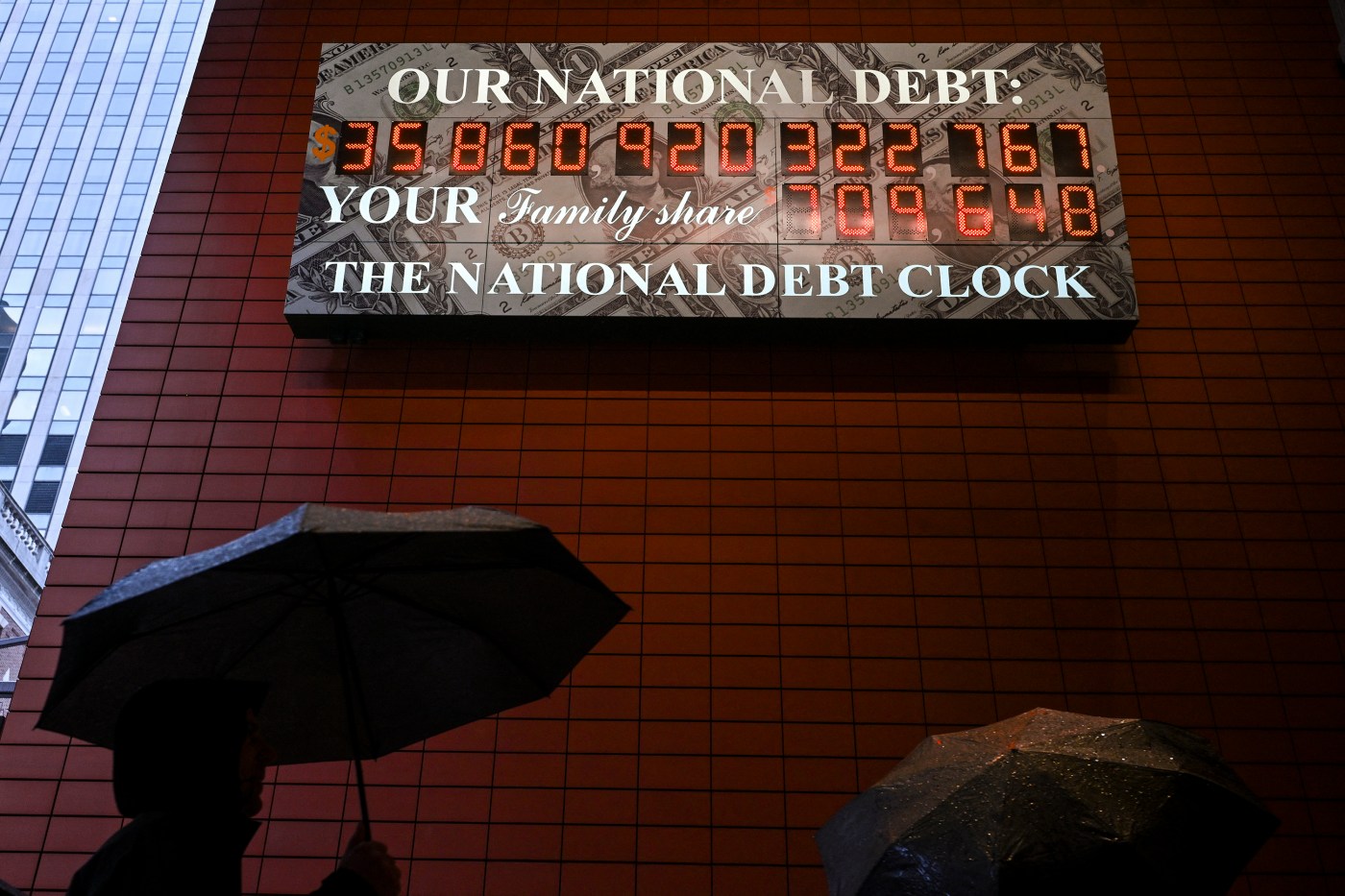
    Time for a reality check: First, a bond market crash would be a disaster that would cost Americans dearly for years to come. Second, the bond market sure doesn’t look like it’s going to crash.

    How do we know? No one can predict the future, but anyone can see what real traders putting real money on the line believe is going to happen in, yes, the future.

    The most active 30-year Treasury bond and 10-year Treasury note contracts show expected prices through the end of the year, and there’s been volatility, for sure. They also reflect an unusual pattern of interest rates staying relatively high even as the dollar weakens.

    So far, however, the markets are not pricing in anything like a crash. In fact, long-term interest rates are less than 5% and inching lower in recent days, which is hardly a sign of an imminent crisis.

    Of course, markets can turn on a dime, as the United Kingdom experienced three years ago. A newly elected prime minister, Liz Truss, pushed through an irresponsible budget that would have funded huge tax cuts with increased borrowing.

    In that case, the reaction was swift: Traders dumped British bonds and sent the British pound plunging against the dollar. Truss wound up being forced out after just 50 days in office, and the British economy is just now starting to recover.

    The same could happen to the U.S., in theory. But in fact, the U.S. economy has a much greater capacity to absorb bad policy than did the U.K., because it has been doing quite well.

    At a speech earlier this month, Austan Goolsbee, who heads the Federal Reserve Bank of Chicago, likened the economy to a buff gym rat with a six-pack of abdominal muscles. Trouble is, this gym rat has a layer of fat over the muscles, so they’re hard to see. In his analogy, the underlying economy is strong, but it’s being obscured by the uncertainty of Trump’s on-again, off-again tariffs, now popularized by the acronym TACO, among other destabilizing policies.

    But with unemployment at just 4.2% and inflation at 2.3% (and closing in on the Fed’s 2% target) the “hard data” are still amazingly healthy. Not only did the U.S. avoid an oft-predicted recession over the past several years, but growth picked up momentum throughout 2024. The U.S. remains the world’s wealthiest country, and if it decided to curb its growing debt by raising more revenue, it could well afford it.

    In his recent talk, Goolsbee acknowledged that U.S. interest rates are higher than they should be because of policy uncertainty. Getting that “dust out of the air,” as he put it, would tee up lower rates. “If you have stable, full employment and inflation going to target, rates can come down.”

    Lower rates make it cheaper to obtain loans and manage debt, which would encourage consumer spending and business investment. Washington needs to cut the chaotic policymaking and embrace responsible political solutions without bond vigilantes forcing the issue — as much as Trump’s critics wish they would.

    Chicago Tribune/Tribune News Service

    Editorial cartoon by Gary Varvel (Creators Syndicate)
    Editorial cartoon by Gary Varvel (Creators Syndicate)
  • Canadian club: G7 leaders gather for summit amid trade wars 

    Canadian club: G7 leaders gather for summit amid trade wars 

    KANANASKIS, Alberta — Leaders of some of the world’s biggest economic powers are gathering in the Canadian Rockies for a Group of Seven summit this week, overshadowed by an escalating conflict between Israel and Iran and U.S. President Donald Trump’s unresolved trade war with allies and rivals alike.

    Israel’s strikes on Iran and Tehran’s retaliation, which appeared to catch many world leaders unawares, is the latest sign of a volatile world.

    Trump in recent days vetoed an Israeli plan to kill Iran’s Supreme Leader Ayatollah Ali Khamenei, a U.S. official told The Associated Press, in an indication of how far Israel was prepared to go.

    British Prime Minister Keir Starmer said he had discussed efforts to de-escalate the crisis with Trump and Israeli Prime Minister Benjamin Netanyahu, as well as other world leaders and said he expected “intense discussions” would continue at the summit.

    As summit host, Canadian Prime Minister Mark Carney has decided to abandon the annual practice of issuing a joint statement, or communique, at the end of the meeting.

    With other leaders wanting to talk to Trump in an effort to talk him out of imposing tariffs, the summit risks being a series of bilateral conversations rather than a show of unity.

    Trump is the summit wild card. Looming over the meeting are his threats to make Canada the 51st state and take over Greenland. French President Emmanuel Macron visited Greenland on Sunday for a highly symbolic stop on his way to Canada, meeting the Arctic territory’s leader and Denmark’s prime minister aboard a Danish helicopter carrier.

    Macron reiterated his criticism of Trump’s intention to take control of the territory.

    “I don’t think that’s something to be done between allies,” he said.

    Macron, who is one of the very few leaders to have known Trump during his first term, was the first European leader to visit the White House after Trump took office, emerging unscathed from the Oval Office encounter.

    But despite the two leaders’ sporadic bromance, Macron’s approach to Trump has failed to bear major results, with France caught up in the president’s planned tariffs on the European Union.

    Nor did it bring any U.S. security guarantees for Ukraine despite Macron’s efforts, together with Starmer, to build a coalition of nations that could deploy forces after any ceasefire with Russia, with the hope it would convince the Trump administration to provide backup.

    Trump was scheduled to arrive late Sunday in Kananaskis, Alberta. Bilateral meetings between other leaders were possible over the weekend, but the summit program does not get underway until Monday.

    Peter Boehm, Canada’s sherpa of the 2018 G7 summit in Quebec and veteran of six G7 summits, expects the heads of state to pivot discussion to devote more time to the war.

    “Leaders can accommodate a discussion, perhaps even a statement,” Boehm said. “The foreign policy agenda has become much larger with this.”

    Leaders who are not part of the G7 but have been invited to the summit by Carney include the heads of state of India, Ukraine, Brazil, South Africa, South Korea, Australia, Mexico and the UAE. Avoiding tariffs will continue to be top of mind.

    “Leaders, and there are some new ones coming, will want to meet Donald Trump,” Boehm said. “Trump doesn’t like the big round table as much he likes the one-on-one.”

    The war in Ukraine will also be on the agenda. President Volodymyr Zelenskyy is due to attend and is expected to meet with Trump, a reunion coming just months after their bruising Oval Office encounter which laid bare the risks of having a meeting with the U.S. president.

  • OBF: Fred Lynn on Red Sox and how game is different today

    OBF: Fred Lynn on Red Sox and how game is different today

    Fred Lynn became a Red Sox icon 50 years ago this summer.

    His 1975 season was so spectacular that he became Major League Baseball’s first player to share Rookie of the Year and AL MVP honors in the same season. He remains part of a Boston Baseball Holy Trinity – with Jim Rice and Dwight Evans – that formed the best Red Sox outfield since World War II.

    Lynn was a 9-time All Star. But he played more games for teams not named the Red Sox – Angels, Orioles, Tigers, Padres – than he did for Boston. He was part of a multi-player trade with California after the 1980 season that brought Joe Rudi and Frank Tanana to Boston.

    A youthful-looking 73, Lynn remains grateful for his days as a pro ballplayer. He still connects with fans in Anaheim, Baltimore, Detroit, and San Diego. But it was his time in Boston and with those Red Sox teams of the 1970s that defined his career.

    Lynn now lives with his wife Natalie in Carlsbad, California, in the hills nestled between Los Angeles and San Diego. His days are filled with long walks, rounds of golf, and keeping tabs on the Red Sox. On Opening Day this year, he reunited with his former teammates.

    Never did three 70-something outfielders look so ready to play.

    “Well, Dwight, Rooster (Rick Burleson) and I are all California guys, and it’s required. Jimmy looks good, too,” Lynn said.

    This being Father’s Day, Lynn has been swamped these past few weeks making videos for Cameo. For $75, fans can get a personalized video greeting from Lynn offering his best wishes, encouragement or whatever else one desires (within reason).

    “We’re very busy this week with Father’s Day coming up,” Lynn said. “I’ve made about 1,400 of these videos. And about 90% of them are for Red Sox fans.”

    During a season in which the 1975 Red Sox have become a staple, Lynn’s No. 19 returned to the spotlight when it was bestowed on rookie phenom Roman Anthony.

    Lynn spoke to the Herald at length on Tuesday about multiple topics concerning the Red Sox, including Anthony.

    “I hope it works out well for him. That number was really good for me, and I hope it’s good to him,” Lynn said. “He knows what he could do.”

    The fanfare or hype – or lack thereof – when Lynn first came up to the major leagues, in contrast to today’s highly publicized prospects. Today’s players like Anthony reach the majors after much media coverage, elevating expectations.

    What was the atmosphere when Lynn finally reached the majors on Sept. 5, 1974?

    “Jimmy was in the organization a few more years than I was, they’d seen him come up through the ranks. He tore them up in the minor leagues. I was a professional a very short time before I got to the big leagues, so they knew about me in college and even though I had a very good college career, there was no TV back then. I never did an interview, so there was no fanfare whatsoever,” Lynn said. “It was my advantage and not theirs because I could see what the picture was showing, but he didn’t know what I could do.”

    For Lynn, playing in the minors meant bad lighting and a short foul pole in right at the late McCoy Stadium that cost him home runs.

    “When I was in the minors, guys would throw strikes and the lighting sucked, the field sucked, and I got to the big leagues. I could see that the guys were throwing strikes. I thought, ‘Well this is better.’”

    Lynn wasn’t shy with his thoughts on Raffy Devers, who was moved off third base in spring training only to be asked again to move to first after being slotted as the DH.

    “His offensive numbers speak for themselves. He doesn’t have to worry about playing third base. Now all he has to work on is hitting,” Lynn said. “When I was asked to DH, it felt at first like you’re pinch-hitting four times. I had to quit thinking like that. You’re in the game. You’re going to get four or five at-bats, so just play the game like you normally would. It’s not that hard. If you get a hit, you always feel good. You’re not tired. You’re not winded. You’re not cold. You’re not hot. You didn’t boot a ball in the outfield or in the infield. You’re just hitting. And if you can hit, oh my God, it’s a nice position once you wrap your head around it mentally, and I think he’s done that, man. He should do really, really well there.”

    Lynn had no issue with changing positions – to a point.

    “I would volunteer to play another position in the outfield – left, right or center. You’d have to learn the angles. If I could help the team by doing that, then that’s what I would do. But if you don’t feel comfortable with it, and he’s already been moved, pushed once from third to DH, and now they said DH to first, well wait a minute. DH or first? What do you want me to do? These are mental gymnastics you have to go through. Could he play first? Yeah, probably because he can catch the ball. So I think he probably could do it. I’m not sure how that’s going to play out.”

    Lynn is not fully sold on Triston Casas, who is out for season due to an injury.

    “Boston’s long-term first baseman is going to be a question,” Lynn said “Casas swings and misses too much. That has to go away. Otherwise, he’s not going to be the answer either. He’s got to tighten up that swing. He could be a positive influence on the team there. But if he doesn’t, then they’re going to have to look for a long-term solution to that.”

    The Red Sox organization’s slavish devotion to analytics has a downside, Lynn said.

    “In spring training. They had a big flap because Jimmy apparently was talking to one of the hitters, and then one of the batting instructors sort of got in the way. I would never do that because it’s not my position. If a player asked for my advice, I’d be more than happy to tell him what I think about his approach, what he’s doing, what he’s seeing. But I would not volunteer because I’m not being paid to do that. And they don’t even know me,” Lynn said.

    But Rice is a fixture both in Fort Myers, and with the Red Sox all season at Fenway Park and on NESN.

    “Jimmy’s there all the time and Jimmy sees something and says, ‘Yeah, you want to try this.’ If somebody gave him grief? Are you kidding? That’s Jimmy Rice, man. He knows how to hit. If he’s going to give me some advice, I’m going to be all ears.”

    When it comes to excuses for their subpar performance this season, injuries carry only part of the blame, Lynn said.

    “That’s always difficult when you lose frontline guys like (Alex) Bregman. That’s a big deal. Your right-handed pop. If (Trevor) Story starts to hit for power, then that alleviates some of that issue. But that’s a big gaping hole. And then you bring up young guys, and I’m fine with that, especially if you’re going to be like a .500 club, get these guys up here and let’s see what they can do, especially defensively.”

    For Lynn (and many others) it’s pitching and defense.

    “Two things that the Red Sox have to do immediately. They have to play better defense, period. And they need to pitch better,” Lynn said. “This team can hit. They score runs. That’s not the issue. The issue is defense and keeping the ball in the park”

    Recording 27 outs is challenging enough. “You can’t give away outs, especially in Fenway Park. You can’t survive. You don’t have to make great plays all the time, but you have to make all of the routine plays to help your pitching staff. And if the defense tightens up, maybe the pitchers can relax a whole little bit. Maybe pitchers now feel like they have to make a perfect pitch to get guys out?”

    One possible root of Boston’s pitching woes is endemic across baseball, Lynn said.

    “The philosophy of pitching across the whole game has to change. Instead of trying to throw as hard as you can, how about throwing quality strikes with movement that get guys out? That works. Throw more strikes. Keep the ball in the ballpark. Catch the ball.”

    And for Lynn, that personal contact between teammates when it comes to “x’s” and “o’s” in the game itself is a lost art.

    “In today’s game, and it’s been going on for quite some time, they’re so wrapped up in videos and statistics and those kinds of things. They forgot to just go out to a bar and have a couple of beers and sit around and just talk about it. What are the other guys thinking? You’d be surprised when you talk to really good hitters about what they’re thinking, how they’re trying to set up pitchers. And it’s really quite entertaining, too, even for me to talk to some of my guys that I played against,” Lynn said.

    Less FaceTime and more face time.

    “We’d sit around, we’d start talking and just kind of pick their brain, well, what’d you think about when you face this guy? What were you trying to do? So those kinds of things. We used to do that all the time, especially if we’re having some trouble with a certain pitcher. And if I can get some sort of information that might help me, I could look at videos so I’m blue in the face, but that’s not going to help me. I’m hearing it from another player, my teammate. That resonates for me.”

    “But that was then. Today is different. So who am I to criticize what they do?”

    Lynn is proud of the fact that he and his teammates never needed to pull a note card out of his pocket to identify where to play for each different batter. His job in center field was to oversee the defense.

    “Your eyes tell you what you should be doing. You should be watching your pitcher. If he’s hitting his spots and you can see that hitters are late on swings, you play the hitter the other way. Or if your pitcher’s missing, you played deeper into the alleys. You can see this. You shouldn’t be having to be told by looking at a sheet. You have your own computer,” Lynn said.

    The perspective from center field was all he needed.

    “I could really see what was going on with my pitchers. When the pitchers are behind in the count a lot, you better back up because you’re going to float one over the middle and guys are going to hit it. And conversely, if your guy’s on, you can tell he’s on, well then, OK, I might move in a little bit. If I’m playing right field against a left-handed hitter, I don’t think he’s getting it over my head. They’re not getting good swings, so I’m going to move in. I don’t care what the cheat sheet says. That’s not today. That’s history. That’s not today. Today is different.”

    And he happily served as the eyes for his teammates.

    “If the catcher sets up to throw outside and my guy’s missing over the middle. I would whistle for Dewey. If I’m going to move over towards Jimmy in left center, I’ve got to pull Dewey with me. I’d wave him over like 20 feet. I make that call because we’re going off of what I see. And so if I see everything as copacetic where they are, I don’t say anything. We had a good working relationship. We knew each other’s game. They knew I was going to get balls in the gap. So we were pretty tight that way. In today’s game, they just all do their own thing.”

    (Contact: @BillSperos and @RealOBF on X and [email protected]). 

  • Trump clears path for Nippon Steel investment in US Steel, so long as it fits the government’s terms

    Trump clears path for Nippon Steel investment in US Steel, so long as it fits the government’s terms

    President Donald Trump signed an executive order paving the way for a Nippon Steel investment in U.S. Steel, so long as the Japanese company complies with a “national security agreement” submitted by the federal government.

    Trump’s order didn’t detail the terms of the national security agreement.

    But the iconic American steelmaker and Nippon Steel said in a joint statement that the agreement stipulates that approximately $11 billion in new investments will be made by 2028 and includes giving the U.S. government a “ golden share ” — essentially veto power to ensure the country’s national security interests are protected against cutbacks in steel production.

    “We thank President Trump and his Administration for their bold leadership and strong support for our historic partnership,” the two companies said. “This partnership will bring a massive investment that will support our communities and families for generations to come. We look forward to putting our commitments into action to make American steelmaking and manufacturing great again.”

    The companies have completed a U.S. Department of Justice review and received all necessary regulatory approvals, the statement said.

    “The partnership is expected to be finalized promptly,” the statement said.

    U.S. Steel rose $2.66, or 5%, to $54.85 in afterhours trading Friday. Nippon Steel’s original bid to buy the Pittsburgh-based U.S. Steel in late 2023 had been valued at $55 per share.

    The companies offered few details on how the golden share would work, what other provisions are in the national security agreement and how specifically the $11 billion would be spent.

    White House spokesman Kush Desai said the order “ensures U.S. Steel will remain in the great Commonwealth of Pennsylvania, and be safeguarded as a critical element of America’s national and economic security.”

    James Brower, a Morrison Foerster lawyer who represents clients in national security-related matters, said such agreements with the government typically are not disclosed to the public, particularly by the government.

    They can become public, but it’s almost always disclosed by a party in the transaction, such as a company — like U.S. Steel — that is publicly held, Brower said.

    The mechanics of how a golden share would work will depend on the national security agreement, but in such agreements it isn’t unusual to give the government approval rights over specific activities, Brower said.

    U.S. Steel made no filing with the U.S. Securities and Exchange Commission on Friday.

    Nippon Steel originally offered nearly $15 billion to purchase U.S. Steel in an acquisition that had been delayed on national security concerns starting during Joe Biden’s presidency.

    As it sought to win over American officials, Nippon Steel gradually increased the amount of money it was pledging to invest into U.S. Steel. American officials now value the transaction at $28 billion, including the purchase bid and a new electric arc furnace — a more modern steel mill that melts down scrap — that they say Nippon Steel will build in the U.S. after 2028.

    Nippon Steel had pledged to maintain U.S. Steel’s headquarters in Pittsburgh, put U.S. Steel under a board with a majority of American citizens and keep plants operating.

    It also said it would protect the interests of U.S. Steel in trade matters and it wouldn’t import steel slabs that would compete with U.S. Steel’s blast furnaces in Pennsylvania and Indiana.

    Trump opposed the purchase while campaigning for the White House, and using his authority Biden blocked the transaction on his way out of the White House. But Trump expressed openness to working out an arrangement once he returned to the White House in January.

    Trump said Thursday that he would as president have “total control” of what U.S. Steel did as part of the investment.

    Trump said then that the deal would preserve “51% ownership by Americans,” although Nippon Steel has never backed off its stated intention of buying and controlling U.S. Steel as a wholly owned subsidiary.

    “We have a golden share, which I control,” Trump said.

    Trump added that he was “a little concerned” about what presidents other than him would do with their golden share, “but that gives you total control.”

    The proposed merger had been under review by the Committee on Foreign Investment in the United States, or CFIUS, during the Trump and Biden administrations.

    The order signed Friday by Trump said the CFIUS review provided “credible evidence” that Nippon Steel “might take action that threatens to impair the national security of the United States,” but such risks might be “adequately mitigated” by approving the proposed national security agreement.

    The order doesn’t detail the perceived national security risk and only provides a timeline for the national security agreement. The White House declined to provide details on the terms of the agreement.

    The order said the draft agreement was submitted to U.S. Steel and Nippon Steel on Friday. The two companies must successfully execute the agreement as decided by the Treasury Department and other federal agencies that are part CFIUS by the closing date of the transaction.

    Trump reserves the authority to issue further actions regarding the investment as part of the order he signed on Friday.

  • Boston star designer David Josef on life, art & Pride

    Boston star designer David Josef on life, art & Pride

    Boston can boast plenty of legends in sports, music, politics, and theater. But fashion? That hasn’t always been a huge one for the city — with only a few exceptions. And one of those exceptions is also one of my favorite people: David Josef, known for his fashion talent and exquisite evening wear, his charismatic personality, and his support for the LGBTQ+ community. He’s dressed iconic women from Debbie Reynolds to Raquel Welch, and continues to jet all over to make gowns for Broadway stars, Tony Award winners, and everyday women alike.

    This Monday, June 16, in celebration of Pride Month and in of support Boston’s only public high school for the visual and performing arts, The Boston Arts Academy Foundation (BAAF) will host Cocktails and Conversation with David. Catch him from 5:30 to 8 p.m. at Fenway Johnnie’s (https://www.fenwayjohnnies.com/) with WCVB TV’s Rhondella Richardson, among many others. If you miss that (seats are very close to being filled), don’t worry — there will be an even bigger splash on Oct. 23, when he’ll be honored at the annual BAAF Honors event, ”The Power of Art to Transform Well-Being,” at MGM Music Hall at Fenway. David will be the fashion honoree, alongside other local legends such as Donnie Wahlberg, Eliza Dushku Palandjian, and New Edition singer and songwriter Johnny Gill. (To learn more and to get tickets, visit baahonors.org.)

    I’ve known David since I was 16, way back when I started my fashion career working at the high-end bridal boutique Yolanda’s in Waltham. When I called him to chat, he was with his husband, Danny, getting ready to head off to Manhattan for a client.

    Q. I remember working with you when I was 16 and working at Yolanda’s. Do you have any memories from that time?

    A. I do! I was always in the boutique doing shows back then. Yolanda was my mentor, and she was so supportive. And it’s been so amazing to follow your life since then. So much has happened.

    Right now Danny and I are about to go to New York to dress singer-songwriter and actress Melissa Manchester — I get to dress her for concerts — and I have to tell you, I live in a state of gratitude. She’s the person who got me through all the bullying as a little gay kid. One of her songs gave me the strength to get through anything. And as I got to know her later as a fashion designer, one day she said congrats on an award I’d just won. And I played it down and she stopped me and said, “No, no. You will never feign humility with me. You earned it. You must know your value.” Now I love who I am. And I without being snobby, I can accept my value. Every night I lay my head on my pillow, and am so grateful looking back on my career of 50 years in this business. It’s remarkable.

    Q. Will you share with readers how you first got your start in fashion?

    A. I grew up as a kid gay kid in Providence, where my mother had an alteration shop that I made clothes in. Donahue Models offered to feature my clothes at a restaurant once a month, and mafiosos would buy them for their girlfriends! Eventually I got accepted to Parsons School of Design but I was afraid to go to New York City, so I went to Lexington instead in 1976 and I rented a space where I did four years of custom designs. When I was 23 I moved to Copley Square in Boston and started approaching local stores, and one day got accepted by Bonwit Teller in New York, and soon was selling to them and Neiman Marcus and many others all over the country.

    But then I burnt out in 2000. I got tired of the rat race — and my mother got sick and passed away. I got depressed. Yolanda saw me and said, ‘I see what you’re going through. Come work at my store.’ I went back and worked one-on-one with her customers. Then I was found the space I’m in in Waltham and slowly got myself back together. Now my clients fly me all over the world for fittings, and I’m happier than ever. So you really can come back stronger than ever.

    Q. And over those years, you’ve dressed some really big names. Is there any glamorous tea you want to spill?

    A. Well, Debbie Reynolds was the funniest, naughtiest woman I’ve ever worked with. And Judith Light was the classiest. We have a a 40-year-friendship. And I’m loving working with Beth Leavel, a Tony-winning actress currently co-starring with Bernadette Peters. I get to dress these incredible women. It’s just astounding!

    Q. What does Pride Month mean to you?

    A. Well, Pride for Danny and me is not a one-month thing. Someone just told us that he was lucky enough to have us as role models, and that’s what we’ve been lucky enough to be. We know our place. We’ve had 45 wonderful years together. And we still look cute.


  • Wax: Congress must lower hospital costs for Medicare patients

    Wax: Congress must lower hospital costs for Medicare patients

    President Trump’s tax bill extension is making its way through Congress, and lawmakers are desperately trying to minimize its potentially negative impacts on high-risk American patients.

    Yet senators can still pursue other avenues to help patients before the bill becomes law.

    Senators can start by correcting a decades-old Medicare loophole exploited by the hospital industry. This loophole allows hospitals and outpatient departments to charge more money for the same service performed at an independent doctor’s office. Known colloquially as “facility fees,” these fees are billed in addition to the actual procedure fee. They are billed to Medicare, secondary insurance, and then to you if not fully covered.

    Mandating these “site-neutral” payments would prevent hospital overreach and save patients billions of dollars. Legislators should take this measure seriously.

    Take a look at the numbers: Closing this loophole could save Medicare patients north of $150 billion. This would have an even more significant impact on patients with vulnerable conditions like cancer, where Medicare patients can save nearly $300 on their chemotherapy treatments.

    Hospitals have gotten away with this sort of highway robbery for years, thanks to a combination of consolidation and misleading arguments. It’s common for hospital networks in large population centers to buy up smaller practices by the dozen and designate them “hospital outpatient departments.” Then, the hospital network drives up costs to cover the increased financial burden of these new offices.

    The arguments for these upcharges are shoddy at best. Hospital networks claim that these higher prices are due to a higher quality of care and providing low-cost treatments for those in need. The reality tells a different story – treatment quality at hospitals isn’t necessarily higher for the same treatment at an independent doctor’s office.

    Much of the cost difference goes to administration fees rather than treatments – an unfortunate byproduct of the climate these hospitals created for themselves.

    Thanks to these incentives for hospital networks, these organizations find it valuable to expand. Expansion requires buying more and more independent practices, and now about one in four healthcare workers is employed at a major hospital network. Hospitals hire more doctors, nurses, and administrative staff, while costs explode and quality of care plummets.

    It’s time for lawmakers to step in and fix this broken system. Site-neutrality has been a policy floated around by members of Congress for years, and there is no better time to implement that policy than now. All it takes is a few strokes of the pen.

    Policymakers on both sides of the aisle want to get this done. Last year, Senators Bill Cassidy, R-La., and Maggie Hassan, D-N.H., unveiled a comprehensive policy framework to implement site-neutrality into actionable legislation. Earlier this month, Senator John Kennedy, R-La., introduced a similar bill on the Senate floor to close the site-neutrality loophole.

    Yet the devil is in the details. Lawmakers disagree on the specifics of how to implement site-neutrality, but they must realize that the common hurdle to overcome is the hospital industry’s resistance.

    The reality is that most bills will be divisive for lawmakers in this polarized Congress, and this latest tax bill is no exception. Moderates are worried about their seats ahead of the midterms, deficit hawks are concerned with overspending, and progressives are alarmed at how much Medicaid will shrink.

    But adding a site-neutrality provision gives lawmakers from all backgrounds an additional layer of flexibility to make all these decisions before a final bill reaches the president’s desk. Saving over $150 billion from one policy measure would provide much-needed breathing room.

    Ultimately, lawmakers must look past the bureaucratic squabbles and politics to focus on the patients that these reforms will help. These savings will go a long way for Medicare patients, including seniors and those with debilitating chronic conditions. Small changes such as this can make much larger waves in the future, as patients from all backgrounds can have a more transparent, fair view into their healthcare expenses without distortions from hospital systems.

    As the Senate argues over the details of the budget bill, it shouldn’t squander this opportunity to make that clearer vision of American healthcare a reality. They must eliminate “facility fees” and establish site-neutral payments for the good of patients everywhere.

    Craig M. Wax is a family physician based in New Jersey

  • Ticker: Inflation ticks up in May; Google offers buyouts 

    Ticker: Inflation ticks up in May; Google offers buyouts 

    U.S. inflation picked up a bit last month as higher prices for groceries and some imported goods were largely offset by cheaper gas, travel services, and rents.

    Consumer prices increased 2.4% in May compared with a year ago, according to a Labor Department report released Wednesday. That is up from a 2.3% yearly increase in April.

    Excluding the volatile food and energy categories, core prices rose 2.8% for the third straight month. Economists pay close attention to core prices because they generally provide a better sense of where inflation is headed.

    The cost of groceries, toys and games, and large appliances rose, which could reflect the impact of President Donald Trump’s tariffs. Yet the price of new and used cars, clothes, airfares, and hotel rooms all dropped from April to May.

    On a monthly basis, overall prices ticked up just 0.1% from April to May, down from 0.2% the previous month, with inflationary pressures appearing muted. Core prices also dropped to 0.1% from 0.2%.

    “You can point to seeing tariffs in this report, but the more important message is that you’re seeing inflation soften enough elsewhere that overall, price pressures continue to subside for the U.S. consumer,” Sarah House, an economist at Wells Fargo, said.

    Google offers buyouts

    Google has offered buyouts to another swath of its workforce across several key divisions in a fresh round of cost cutting coming ahead of a court decision that could order a breakup of its internet empire.

    It’s not clear how many employees are affected, but the offers were made to staff in Google’s search, advertising, research and engineering units, according to The Wall Street Journal. Google employs most of the nearly 186,000 workers on the worldwide payroll of its parent company, Alphabet Inc.

  • Fingers crossed! Talks to avoid recession begin

    Fingers crossed! Talks to avoid recession begin

    U.S. stocks drifted through a quiet Monday as the world’s two largest economies began talks on trade that could help avoid a recession.

    The S&P 500 edged up by 0.1% and is within 2.3% of its record, which was set in February. The Dow Jones Industrial Average slipped by 1 point, which is well below 0.1%, and the Nasdaq composite added 0.3%.

    Officials from the United States and China met in London to talk about a range of different disputes that are separating them. The hope is that they can eventually reach a deal that will lower each’s punishing level of tariffs against the other, which are currently on pause, so that the flow of everything from tiny tech gadgets to enormous machinery can continue.

    Hopes that President Donald Trump will lower his tariffs after reaching such trade deals with countries around the world have been among the main reasons the S&P 500 has rallied so furiously since dropping roughly 20% from its record two months ago. It’s back above where it was when Trump shocked financial markets in April with his wide-ranging tariff announcement on what he called “Liberation Day.”

    This may be the shortest sell-off following a shock of heightened volatility on record, according to Parag Thatte, Binky Chadha and other strategists at Deutsche Bank. Typically, stocks take around two months to bottom following a spike in volatility and then another four to five months to recover their losses. This time around, stocks have basically made a round trip in less than two months.

    But nothing is assured, of course, and that helped keep trading relatively quiet on Wall Street Monday.

    Some of the market’s biggest moves came from the announcement of big buyout deals. Qualcomm rallied 4.1% after saying it agreed to buy Alphawave Semi in a deal valued at $2.4 billion. IonQ, meanwhile, rose 2.7% after the quantum computing and networking company said it agreed to purchase Oxford Ionics for nearly $1.08 billion.

    On the losing side of Wall Street was Warner Bros. Discovery, which flipped from a big early gain to a loss of 3% after saying it would split into two companies. One will get Warner Bros. Television, HBO Max and other studio brands, while the other will hold onto CNN, TNT Sports and other entertainment, sports and news television brands around the world, along with some digital products.
    Tesla recovered some of its sharp, recent drop. The electric vehicle company tumbled last week as Elon Musk’s relationship with Trump broke apart, and it rose 4.6% Monday after flipping between gains and losses earlier in the day.

    The frayed relationship could end up damaging Musk’s other companies that get contracts from the U.S. government, such as SpaceX. Rocket Lab, a space company that could pick up business at SpaceX’s expense, rose 2.5%.
    All told, the S&P 500 rose 5.52 points to 6,005.88. The Dow Jones Industrial Average slipped 1.11 to 42,761.76, and the Nasdaq composite rose 61.28 to 19,591.24.

    In stock markets abroad, indexes were modestly lower in Europe after rising across much of Asia.

    Chinese markets climbed even though the government reported that exports slowed in May, growing 4.8% from a year earlier after jumping more than 8% in April. China also reported that consumer prices fell 0.1% in May from a year earlier, marking the fourth consecutive month of deflation.

    Stocks rallied 1.6% in Hong Kong and rose 0.4% in Shanghai.

  • Detroit auto parts company that sued over ‘crippling’ tariff policy could close in weeks

    Detroit auto parts company that sued over ‘crippling’ tariff policy could close in weeks

    Detroit Axle, a large aftermarket auto parts dealer, says it may go out of business within weeks unless it gets certain tariff relief on the goods it imports from China.

    The company sued President Trump’s administration last month over a tariff policy that ended the “de minimis” exemption, which previously allowed small-value packages from China to enter the country duty-free. In a filing Friday in the U.S. Court of International Trade, Detroit Axle urged swift action in the case, suggesting its business is near crumbling in the current tariff environment.

    “Detroit Axle’s situation is dire; it will likely be forced to shutter most or all of its business and lay off hundreds of employees if it does not receive relief by the end of June,” attorneys for the company wrote.

    The family-run company, which says it employs more than 500 people total and more than 230 in Michigan, is a nationwide retailer and distributor of car parts for mechanics and do-it-yourselfers.

    But it says that the problem with the small-value package exception centers on its distribution operation in Juarez, Mexico, which receives parts from China before shipping them out to U.S. customers. Before, shipments worth under $800 could avoid being taxed at the U.S. border, but in early May, Trump’s move to end that exemption took effect.

    That has left the company to pay a “crippling 72.5% tariff on goods that it ships from its Mexico facility to consumers in the United States,” its attorneys wrote. The company argues that the administration exceeded its authority and didn’t follow proper rule-making procedure when it axed the small-value goods exception.

    The retailer said in court filings that it has temporarily kept its doors open by fulfilling customer orders from inventory it already had on hand that wasn’t subject to tariffs. But now those supplies are running out.

    On Thursday, the court denied a U.S. Justice Department motion to pause the litigation amid a larger legal fight over Trump’s tariffs that is pending. The order said the government attorneys must respond to Detroit Axle’s requests for relief by June 20, with Detroit Axle needing to file a reply by July 7.

    But the company said Friday that’s simply not a fast enough timetable as it tries to save the business from “destruction.”

    “The company cannot absorb the massively increased costs from the 72.5% tariffs and cannot meaningfully raise prices on its cost-conscious customers,” company attorneys wrote. “So by the end of June, Detroit Axle will likely be forced to close its doors and lay off hundreds of employees in Michigan.”

    Justice Department lawyers, as they requested to temporarily halt the case proceedings as other tariff legal challenges moved forward, argued that Detroit Axle is “hard-pressed to argue that it is suffering actual and immediate hardship” because it didn’t file its case very quickly, instead waiting until about two weeks after the new policy took effect.

    The Justice Department and an attorney for Detroit Axle didn’t immediately respond to a request for comment Friday afternoon.

    Originally published by The Detroit News

  •  Doc does deep dive into the ‘Ocean with David Attenborough’ 

     Doc does deep dive into the ‘Ocean with David Attenborough’ 

    Today’s spectacular, eye-popping documentary feature “Ocean with David Attenborough” only took 3-plus years, three directors, several ships, fearless divers, camera crews and the 99-year-old icon to tell an incredible but true story perfectly timed for its NatGeo premiere, the day before Sunday’s World Ocean Day celebrations.

    “We had this idea three-and-a-half years ago with David Attenborough to tell this incredible 100-year-story of the ocean,” director Colin Butfield said in a joint phone interview.

    “Our first act really is all about discovery, particularly in David’s lifetime. How we’ve gone from knowing almost nothing about the ocean to a really deeply understanding and finding these incredible habitats within it.

    “The second part is immersing us in the destruction they’ve got. The third, which has only been possible to film in the last 15 or 20 years, are the most incredible examples of ocean recovery anywhere on the planet.

    “It was important that we film those because it’s not enough to just say, ‘Oh, we should be hopeful for the future.’ There was a chance we can actually show it for the first time! ‘Ocean’ was designed to show all three things in one cinematic story.

    “We worked together but divided it up as well. A lot of what I did was based in the UK, working with David.”

    Noted director Keith Scholey, “I’m the old boy on the team, I’ve worked with David for 44 years. I was bringing great experience;  I’ve made a lot of ocean films before.

    “That meant we can cut to the chase quite quickly if you know certain places work, other places don’t.  And then Toby Nowlan brought youthful exuberance.”

    “After the last 17 years David Attenborough remains the inspiration to my getting into this business,” Nowlan, 37, said. “Keith asked me to come in and direct the two years of filming, and lead and direct the edit, deliver the film. That’s what I’ve done for the last three years.

    “It’s been an incredible privilege. Even after working on David’s films for quite a while, nothing comes close to the personal piece which is this seminal feature film with David Attenborough’s greatest message, his most important story he’s ever told, doing it when he’s 99.

    “It’s remarkable, isn’t it? I remember being with him on a freezing cold winter beach filming the opening and closing with those last lines: ‘It is my great hope that we all come to see the ocean not as a dark and distant place with little relevance to our lives on land but as the lifeblood of our home. For if we save the sea, we save our world.’”

    “Ocean with David Attenborough” streams on NatGeo June 7

    David Attenborough looks out to sea in Southern England. From National Geographic and Silverback and in association with All3Media International, documentary special “Ocean With David Attenborough” highlights the vital, achievable actions the world can take to restore the ocean and stabilize the climate, debuting in 2025. (Photo Conor McDonnell)