Thomas Maioli, Cannabis Policy & Compliance Lexine Moyer, Public Works.
Blog
-
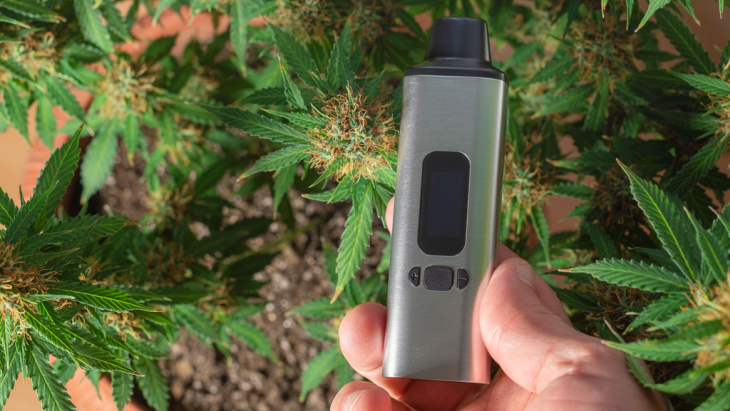
Clinical Trial Data Provides “Compelling Evidence” That Vaporized Cannabis Mitigates Migraine Symptoms
 “Nearly one-third of migraine sufferers have tried cannabis for symptom management, and patients consistently report that it significantly reduces their pain severity and migraine frequency. These data further affirm patients’ testimonials.”
The post Clinical Trial Data Provides “Compelling Evidence” That Vaporized Cannabis Mitigates Migraine Symptoms appeared first on NORML.
-
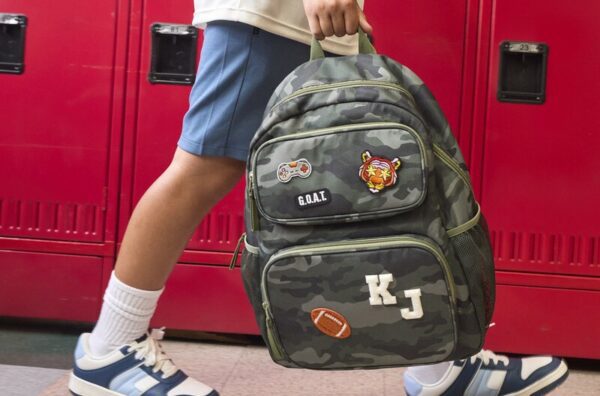
Target Brings Back BTS Personalization Stations at 500 Stores
Target is looking to continue the back-to-school sales momentum with ongoing sales on school essentials and the return of its personalization stations, which let students customize their school and dorm essentials.
Personalization station events will be held at nearly 500 Target stores across the U.S., double the number of stores that hosted similar events last year. This will include 100 college-focused events on July 26 and 400 school-age-focused personalization events on Aug. 2-3. Students will be able to personalize everything from backpacks and lunchboxes to towels and pillows with embroidery, patches and more, as well as get free giveaways of shoelace kits, school-themed patches and monogrammed bath wraps.
The retailer also is hosting a second savings event from July 27-Aug. 2, following on its promotion in early July timed to coincide with Prime Day. The “Back-to-School-idays” event will feature discounts of up to 30% on key school items.
“Getting ready for a new school year should be an exciting time for families. That’s why I’m proud of the way the Target team has leaned in to create an experience that’s fun, stylish and affordable,” said Rick Gomez, EVP and Chief Commercial Officer of Target in a statement. “With great deals on essentials, fun personalization events in hundreds of stores and even more savings for Target Circle members, we’re ready to help families everywhere get the new school year off to a great start.”
-
Cannabis business hours in Central Falls may be extended | Pawtucket – The Valley Breeze
Aura of Rhode Island, pictured, is currently the only cannabis establishment in the city of Central Falls. … CENTRAL FALLS – An ordinance revision …
-
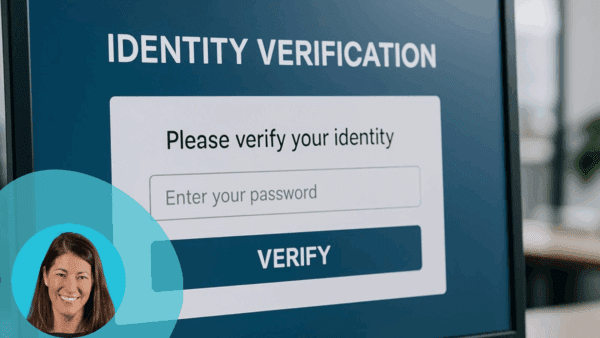
It’s Your Relationship: The Hidden Cost of Sending Customers Off-Site for Verification
Brands are investing more than ever in building direct relationships with their customers. First-party permissioned data is now the foundation of marketing, loyalty, and personalization strategies. But one critical moment often disrupts this connection: identity verification.
At the exact moment when a customer is proving who they are to receive a special offer — whether as a student, military member or senior citizen — many brands send them off-site to a third-party verification platform. This move introduces friction, undermines trust and creates unnecessary risks. Instead of reinforcing the relationship, it interrupts it.
Let’s break down why sending customers off-site for verification is a mistake.
More Drop-Offs, Fewer Verified Customers
Every extra step in a customer journey increases the risk of abandonment. Redirecting users to a third-party site causes friction, confusion and aggravation. Instead of a quick and seamless process, customers must now navigate an unfamiliar interface — often with a different design, branding, or user experience.
Complicated or inconvenient verification processes can lead to huge increases in drop-off rates, turning potential conversions into lost opportunities. That’s real revenue left on the table — not because customers weren’t eligible, but because the process was too frustrating to complete or too unfamiliar to trust.
Trust Takes a Hit
Trust is fragile. A sudden redirect during the verification process can feel jarring — even suspicious. Customers may hesitate, wondering, “Why is this happening? Is this a scam?” In an era of phishing attacks and online fraud, consumers are right to be wary of unexpected detours.
Even if they complete the process, their confidence in your brand may be shaken. Instead of reinforcing loyalty, the verification experience leaves them questioning whether their data is safe and whether they should even proceed with the transaction.
Loss of Control Over the Customer Experience
Every interaction shapes brand perception, and identity verification is no exception. When you hand this process over to an external provider, you surrender control over the design, the messaging and the seamless customer journey. The verification process may not match your brand’s tone, aesthetic or customer service philosophy.
Even worse, external providers may sell your customers’ data to competitors or otherwise use it for their own purposes. And that is the last thing that you — or they — want.
Increased Complexity and Compliance Risks
Moving customer data between environments also creates vulnerabilities. Privacy regulations like GDPR and CCPA place strict requirements on how brands collect, store and transfer data. Every additional touch point adds complexity and increases the chances of non-compliance, data mishandling or potential security gaps.
Increased Security Concerns
Many consumers today are hyper-aware of the threats posed by online fraud, identity theft and data breaches. For that reason, consumers are understandably reluctant to provide sensitive information online. Further, some people might not have certain verification information at the ready (not everyone has memorized their social security number, for example). Identity verification platforms can fill that gap by utilizing real-time verification, trusted and authoritative data sources, multi-layered adaptive verification and more by asking for basic information.
Keep it Direct, Keep it Seamless
Brands are working hard to build direct, trusted relationships with customers. Every interaction is an opportunity to reinforce that trust, making consistency and control over the experience essential. Off-site verification disrupts that effort. It introduces friction, weakens trust and creates unnecessary compliance and security risks.
The real promise of first-party permissioned data isn’t just collecting it — it’s ensuring that it flows smoothly through a transparent, opt-in relationship. Keeping verification in-brand ensures that customers stay engaged, data remains secure and your brand retains complete control over the consumer experience.
Your customer relationships are too valuable to take outside of your brand’s environment. Keep them direct. Keep them seamless. And build lifetime loyalty from their very first interaction with you.
Stephanie Copeland Weber is the CEO of SheerID, a leading provider for engaging and verifying high-value audiences. Over the past 25 years, she has developed deep expertise in growing and scaling the teams and operations of dynamic, high-growth, SaaS and tech-enabled services businesses.
-

Listen Now: True Religion’s Secret to Winning Over Gen Z
Five years after filing for its second bankruptcy, True Religion is back and better than ever under new owners. Since emerging from Chapter 11 the company has been on a reinvention tear, with a renewed focus on DTC and connecting with younger consumers — and it’s paying off big time. The brand has gone from win to win in recent years with its trend-right styles and focused celebrity collaborations.
On this week’s episode of the Retail Remix podcast, True Religion’s Creative Director Tina Blake takes listeners inside the brand’s ongoing evolution.
“We always honor our roots here, especially the strong ties to hip-hop culture that we’ve had all these years,” Blake shared. “It really helped shape True Religion from the start. Evolution is key and we identify the trends and lean into them from a brand heritage perspective, but we really like to go at it with a new tone and a fresh feel. It’s about preserving what has made us distinctive while refreshing our tone and design language to remain relevant.”
Blake shares how the brand is doing that, as well as:
- How trend data and cultural cues guide True Religion’s product and creative strategies;
- The brand’s rapid growth in women’s and its plans to expand the category even further;
- Why authenticity is key to its celebrity and cultural collaborations;
- PLUS her go-to spot in LA for fashion inspiration.
Listen to the episode here or anywhere you get your podcasts. And head over to LinkedIn to share your thoughts on the episode and who you’d like to hear from next!
-
Trulieve Expands Distribution of Onward, Launches THC-Infused Energy Drink Upward
The cannabis company’s Onward and Upward premium beverages are available for consumers 21 and older.
-
Hotel near Las Vegas Strip faces pile of unpaid bills | Tourism | Business
He wanted to turn the 64-room hotel on Sahara Avenue into a cannabis-friendly destination and spent millions overhauling the place. His hotel, the …
-
Clinton Criminality Detailed
Senate Judiciary Committee Chairman Chuck Grassley (R-Iowa) Monday brought light the Department of Justice (DOJ) Office of Inspector General’s (OIG) findings that the Federal Bureau of Investigation (FBI) failed to fully investigate Hillary Clinton’s use of a private email server and mishandling of highly classified information during her time as Secretary of State. The newly declassified “Clinton annex” is an appendix to the DOJ OIG’s June 2018 report reviewing the DOJ and FBI’s handling of the Clinton investigation.
DOJ, under the leadership of Attorney General Pam Bondi, and other agencies declassified and provided the Clinton annex to Grassley at his request. Grassley has sought information from DOJ and FBI about the document since 2018 and again submitted his request to then-Attorney General Bill Barr in 2019. He, along with Sen. Ron Johnson (R-Wis.), requested President Donald Trump declassify the document in 2020, and Grassley reiterated the request in 2025.
“This document shows an extreme lack of effort and due diligence in the FBI’s investigation of former Secretary Clinton’s email usage and mishandling of highly classified information,” Grassley said. “Under Comey’s leadership, the FBI failed to perform fundamental investigative work and left key pieces of evidence on the cutting room floor. The Comey FBI’s negligent approach and perhaps intentional lack of effort in the Clinton investigation is a stark contrast to its full-throated investigation of the Trump-Russia collusion hoax, which was based on the uncorroborated and now discredited Steele dossier. Comey’s decision-making process smacks of political infection.”
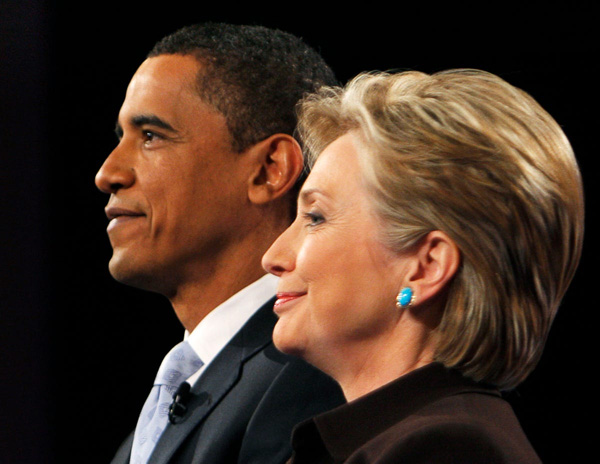
Barack Obama and Hillary Clinton “I warned years ago that the Clinton investigation failed to hit the mark, and I’m grateful the American people can finally see the facts for themselves,” Grassley continued. “After nearly a decade in the shadows, this information is now coming to light thanks to Attorney General Pam Bondi and FBI Director Kash Patel’s dedicated efforts to fulfill my congressional request. I appreciate their ongoing commitment to transparency and strongly urge them to continue to fully review this matter, including its national security impact.”
Read the Clinton annex HERE.
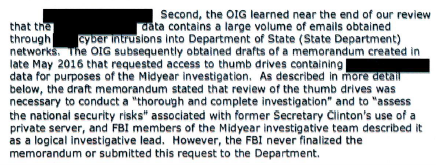
The DOJ OIG’s Clinton annex shows the FBI obtained thumb drives from a source during the Clinton investigation, but then-FBI Director James Comey, as well as then-Deputy FBI Director Andrew McCabe, former FBI Special Agent Peter Strzok and others, failed to perform additional, targeted searches of the drives, even though they contained information relevant to the inquiry. The DOJ OIG report illustrates that the FBI failed to thoroughly and completely investigate the Clinton matter as a result, as well as vet the serious national security risks created by Clinton’s careless handling of highly classified information. According to the DOJ OIG, the thumb drives contained highly sensitive information exfiltrated from U.S. government agencies, including the Department of State, as well as then-President Barack Obama’s emails and, potentially, congressional information. The thumb drives were never reviewed as part of the Clinton investigation, contrary to the recommendation of a draft FBI memorandum. The DOJ OIG report also shows the drives should have been immediately reviewed for foreign intelligence purposes, but were not.
The FBI also obtained intelligence reports discussing purported communications between Rep. Debbie Wasserman Schultz (D-Fla.), who was chairwoman of the Democratic National Convention (DNC) at the time, and two different individuals who worked for the Soros Open Society Foundations. The intelligence reports alleged that the Obama administration took efforts to scuttle the investigation into Clinton and protect her candidacy. The DOJ OIG Clinton annex shows Comey, McCabe and Strzok, among others, did not make serious investigative efforts to determine the veracity, or lack thereof, regarding the intelligence reports.
On July 5, 2016, Comey exonerated Clinton in a public statement regarding the investigation and recommended DOJ take no legal action to hold her accountable. Grassley’s oversight revealed Comey planned to exonerate Clinton even before interviewing her. Weeks later, on July 31, 2016, Comey’s FBI formally opened the bogus Crossfire Hurricane investigation into President Trump’s disproven collusion with Russia. On that day, Strzok texted Lisa Page, an FBI lawyer, saying: “And damn this feels momentous. Because this matters. The other one did, too, but that was to ensure we didn’t F something up. This matters because this MATTERS. So super glad to be on this voyage with you.”
Grassley cited Comey’s handling of the Clinton investigation as evidence that Comey lacked the ability to maintain the public’s trust in the FBI, and was therefore rightfully terminated.
-
Marijuana and teen psychosis – a silent epidemic | Letters to the Editor | valleybreeze.com
… marijuana induced psychosis. The research is alarming. Firstly, it must be said that adult marijuana use is legal in Rhode Island, and we are not …