… cannabis consumption holiday. … For individuals under age 21, however, marijuana consumption is a Class D misdemeanor under Connecticut state law.
Tag: Northeast
-
Protest at RI Hospital as ICE reportedly denies man access to attorney
Protesters gather outside Rhode Island Hospital on April 24, 2025 … A peek inside the Thomas C. Slater Compassion Center cannabis store.
-

Maryland: Governor Signs Legislation Expanding Expungement, Shielding Low-Level Marijuana Convictions from Public View
 “The legislation signed today strengthens the Moore-Miller Administration’s all-of-the-above approach to public safety while creating pathways to work, wages, and wealth for rehabilitated Marylanders,” the administration stated in a press release.
The post Maryland: Governor Signs Legislation Expanding Expungement, Shielding Low-Level Marijuana Convictions from Public View appeared first on NORML.
-
New Hampshire: House-Backed Marijuana Reform Bills Stall in Republican-Led Senate

 “Despite the popularity of these issues among New Hampshire voters, the Senate continue to be an impediment to reform. Far too often, this body engages in partisan politics rather than working toward the interests of the majority of New Hampshire voters who want to see marijuana legal in the ‘Live Free of Die’ state.”
The post New Hampshire: House-Backed Marijuana Reform Bills Stall in Republican-Led Senate appeared first on NORML.
-
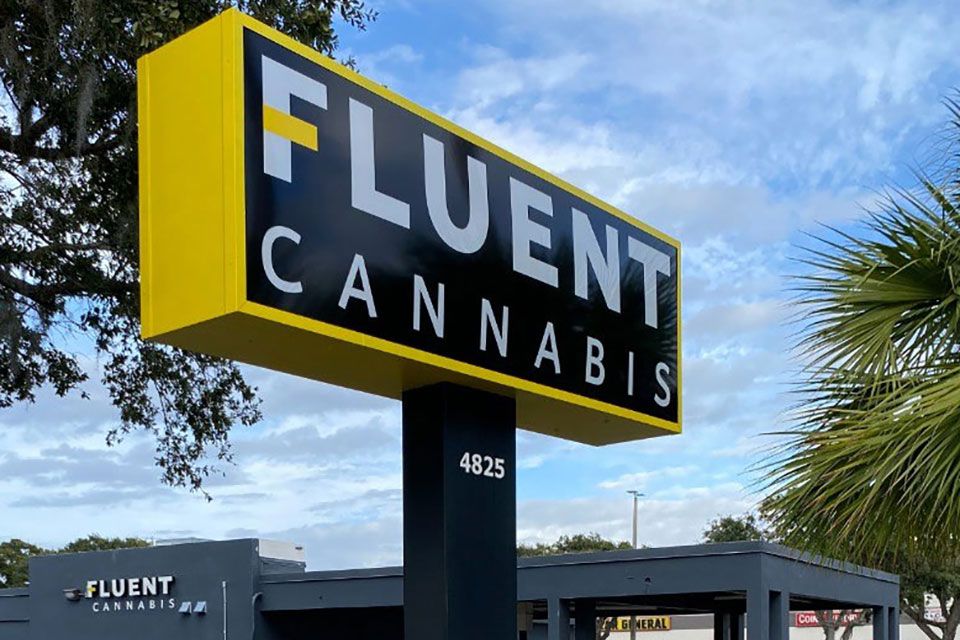
Fluent posts $40M loss for 2024 despite New York entry, other expansion efforts
Florida-based Fluent Corp. (CSE: FNT.U) (OTCQB: CNTMF) posted a $40.3 million net loss for the 2024 calendar year against $103.5 million in net revenues, the company reported on Thursday after U.S. markets closed.
The annual loss was up 78% year-over-year from the $22.7 million net loss reported in 2023, which CEO Robert Beasley didn’t bother addressing in a press release.
Rather, Beasley said the company is “positioning ourselves for continued success in the year ahead,” with the acquisition of RIV Capital in New York last year, followed by a rebranding from Cansortium to Fluent Corp., the launch of several new product lines and other expansion efforts that he said are already bearing fruit.
Beasley also denied that the failure of recreational marijuana legalization at the ballot box last fall in Florida had a significant impact on the company’s business plans, but admitted the company’s been “somewhat impacted by broader industry dynamics.”
“Many in the sector had prepared extensively for the amendment’s passage, and its delay has created market challenges, such as oversupply, heightened competition and increased product discounting,” Beasley said.
For the fourth quarter, which ended on Dec.31, 2024, Fluent reported a year-over-year revenue downturn to $24.9 million from $25.5 million. For the full year, however, revenues were up 6.4% to $103.6 million from $97.3 million.
In the final quarter of the year, Fluent also reported an impairment of intangible assets of $64.3 million, which it said was related to a license in Florida and “reduces the carrying value of the Company’s intangible assets on its consolidated statements of financial position to $37.6 million.”
Fluent currently operates 42 dispensaries in Florida, New York, Pennsylvania and Texas, and said it expects to open at least three more in 2025. The company also expects to finish construction at a new cannabis cultivation facility in Tampa Bay by the end of the second quarter, which will add another 7,000 square feet of canopy to its production capacity.
The company recently refinanced a $71 million loan from Chicago Atlantic that had been set to mature in May and inked a new $96.5 million credit line with the firm.
At the end of December, Fluent had $61.4 million in total assets, including $40.1 million in cash, against $215.9 million in total liabilities.
The post Fluent posts $40M loss for 2024 despite New York entry, other expansion efforts appeared first on Green Market Report.
-

4Front Ventures delays annual filings, can’t pay auditors
4Front Ventures (CSE: FFNT) (OTCQB: FFNTF) said Wednesday it can’t meet its April 30 regulatory deadline to file its annual financial report because it can’t pay its auditors.
The Phoenix-based company also applied for a management cease trade order that would temporarily restrict company leaders from trading its securities while it tries to fix its money problems.
The delay comes as the company works to “resolve the issue and expects to be able to file the necessary reports upon completion of securing additional financing, restructuring its liabilities and continuing discussions with one of the company’s lessors,” according to a news release. Management stated that it expects to file within 60 days of restarting its audit.
The delay follows a tough stretch for 4Front, which lost $6.4 million in the third quarter while watching its revenue slide. Third-quarter revenue dropped to $15.2 million, down from $20.1 million a year earlier and lower than the $18.7 million from the previous quarter.
The company blamed “softness in our retail channel stemming from heightened competition” in both Illinois and Massachusetts markets for the revenue dip.
Still, CEO Andrew Thut previously tried to sound positive, saying the company was making progress on scaling production in Illinois, growing wholesale in Massachusetts and seeing better results in Washington.
“Despite the uncertainties surrounding federal cannabis reform, we’re optimistic, especially given signs that we may have unexpected advocates in the incoming administration,” Thut said at the time. “We’re confident entering Q4 and are ready to return to growth and sustainable positive cash flows from operations.”
4Front also said at the time that it retained Canaccord Genuity to help with an internal reorganization, particularly regarding its financial position. The company also took out an $850,000 loan to finance ongoing operations.
The company asked for relief under Canadian National Policy 12-203, which would block management from trading company securities until it files its financials. The Ontario Securities Commission hasn’t ruled on this request yet.
If rejected, the commission might instead impose a broader order affecting all company securities.
While the filings remain outstanding, 4Front promised to provide biweekly status updates and confirmed that insiders can’t trade company stock until the annual filings are submitted.
The company has been pushing growth initiatives despite its financial crunch. During the third quarter, it continued building a massive 250,000-square-foot cultivation facility in Matteson, Illinois, planning to expand from 24,000 to 34,800 square feet of growing space. Its Massachusetts wholesale business showed some promise with a 56% increase in revenue to nearly $2 million for the quarter.
As of September 2024, 4Front had $278 million in assets, with just $1.2 million in cash, against $326.5 million in liabilities, including nearly $69 million in debt.
The company said there are no bankruptcy proceedings underway and “no material business developments” since filing its last quarterly report in December beyond what its already disclosed.
The post 4Front Ventures delays annual filings, can’t pay auditors appeared first on Green Market Report.
-

‘Stoner stereotype’ not enough for cannabis marketing
Cannabis marketing isn’t just about buying ad space on Weedmaps or Leafly anymore. But the options might not be obvious to everyone – and how you advertise matters as much as where, according to one marketing expert.
Today there are a number of avenues available to marijuana businesses trying to expand their reach with customers, according to Karen Cuce, vice president of strategy at Pennsylvania-based Brkthru.
“There are a vast array of options in terms of what cannabis companies can do” to broaden their consumer base and reach new customers, Cuce said. “That can be streaming television, it can be through websites and apps – specifically banner ads, online video or the videos that play before, during, or after a piece of video-based content that the consumer’s watching. Streaming music, streaming audio, podcasts, these are all channels with which the cannabis user is actually spending disproportionately more time than the average U.S. citizen. They are vastly and deeply digitally connected.”
Cuce said her firm focuses primarily on paid media options for cannabis clients, which rules out many of the bigger social media platforms simply because they won’t accept paid ads from marijuana businesses. But at least one – X, formerly known as Twitter – has rolled back such restrictions, Cuce noted.
At the same time, she said, it’s never a good idea to put all your eggs in the same basket when it comes to a marketing strategy. A better plan, she said, is to diversify.
“We can take (cannabis companies’) organic content and seamlessly lift it to run it across, and here’s what I’d recommend, definitely display because that’s going to be a very efficient means to extend reach and really stretch their budget,” Cuce said. “Essentially we’re using very simple imagery as well as a headline, blending it in with the native environment, the publisher on which the ad appears. It’s essentially sponsored content.”
“Both of those channels, as well as online video, have been a really effective trifecta for our cannabis businesses,” Cuce said. “Those are all highly adaptable channels. We can use a number of different targeting approaches.”
A few other pointers Cuce suggested that cannabis companies keep in mind:
Don’t rely on “stoner stereotypes.” Cuce said marketing research has found that modern-day cannabis consumers are diverse, cause-driven, value-driven and often highly successful professionals. “Quite frankly, it’s not just a bunch of people, stereotypically speaking, sitting around eating pizza and potato chips while they’re playing video games. It’s so much more,” Cuce said.
Advertise sales and deals for holidays like 4/20, which can be a great lure for budget-conscious customers. “We know that discounts can be motivating, they can certainly be a hook,” Cuce said.
If a cannabis company has a limited marketing budget, skip marijuana-focused websites like Weedmaps and Leafly in favor of advertising channels that will reach broader “canna-curious” audiences, instead of only those that are already loyal customers. “It is absolutely critical, especially as we see so many cannabis brands really stepping up and owning the space,” Cuce said.The post ‘Stoner stereotype’ not enough for cannabis marketing appeared first on Green Market Report.
-

Grown Rogue posts strong early results from ABCO Garden State
Grown Rogue International Inc. (CSE: GRIN) (OTC: GRUSF) announced that its New Jersey cannabis cultivation affiliate generated $1.8 million in preliminary first-quarter revenue with gross margins between 55% and 60%, showing some early success in the Garden State market.
The Oregon-based craft cannabis company provided some details on both the performance and financial structuring of its New Jersey operation, ABCO Garden State, LLC.
According to the company, ABCO has achieved cultivation yields exceeding 60 grams of flower per square foot of bench space and has penetrated more than half of New Jersey’s dispensaries with its flower and pre-roll products.
“I’m excited by the initial progress we have seen in New Jersey across cultivation, post-harvest, and sales,” CEO Obie Strickler said in a statement. “We are seeing strong cultivation yields, greater than 60g of flower per square foot of bench space with preliminary gross margin between 55-60%.”
The company reported an average selling price exceeding $2,500 per pound for whole flower and pre-roll products during the first quarter. Strickler noted that ABCO products are seeing “accelerating re-order trends, providing some early validation with respect to our quality, value, and brand strength.”
Grown Rogue currently owns 44% of ABCO but plans to exercise its rights to convert to 70% ownership in fall 2026, the earliest opportunity allowed under New Jersey regulations. The company has structured its investment primarily through senior secured promissory notes that require repayment before any profit distributions, with a March 31 balance of $8.2 million including accrued interest.
“The majority of the capital Grown Rogue has deployed in ABCO has been structured through secured loans,” CFO Andrew Marchington said in the news release. “The repayment of these notes are structured to be paid as a first priority before the distribution of any profits to ABCO partners. We believe this is a preferred deal structure for Grown Rogue shareholders despite its complex impact on our financial statements.”
ABCO is planning some big expansion, with construction of Phase II scheduled to begin in the second quarter. That’ll double steady-state production from the current 500-600 pounds per month to 1,000-1,200 pounds monthly, it said, with full capacity expected by early 2026.
Due to accounting rules, Grown Rogue doesn’t anticipate being able to consolidate ABCO’s financial results until it obtains 70% ownership. Instead, the company said it will provide pro forma disclosure regarding ABCO operations to give investors appropriate transparency.
The post Grown Rogue posts strong early results from ABCO Garden State appeared first on Green Market Report.
-

Rhode Island finalizes long-awaited retail cannabis expansion
Rhode Island’s Cannabis Control Commission voted Friday to approve a comprehensive set of regulations that will govern the state’s recreational marijuana market, according to the Rhode Island Current. The new rules clear the way for the expansion of retail operations nearly two and a half years after legalization.
“These are truly homegrown, just like our cultivators,” Commission Chairperson Kimberly Ahern said following the panel’s vote. “This is an industry that is growing here thoughtfully, intentionally, deliberately – and it needs to reflect that.”
The three-member commission wrapped up its decision in just 18 minutes, the outlet reported, but the path to this moment has been anything but quick.
Since recreational sales began in December 2022, only seven previously authorized medical marijuana dispensaries have been permitted to sell cannabis to adult consumers, with two more in development stages. Meanwhile, 60 licensed cannabis growers have been waiting to supply a market that barely exists.
“Our industry has probably already lost 150 jobs in the first wave of layoffs,” Peter Kasabian of Loud LLC said at a state Senate hearing in June 2023, Green Market Report previously wrote. “That’s the first round of layoffs. Who knows when the next round is coming?”
Kasabian, who co-founded Sensible Cultivators for Intelligent Reform, expressed relief after Friday’s vote.
“It’s awesome that this finally happened – we’ve been waiting years for this,” he told the Rhode Island Current.
The regulations, which take effect May 1, establish a “hybrid” selection process where applicants for the 24 new retail licenses will first be screened for qualifications before entering a lottery. The system includes specific provisions for social equity applicants and worker-owned cooperatives.
Six licenses will be reserved for social equity applicants and another six for worker-owned cooperatives. Licenses must be distributed across six geographic zones with a maximum of four stores per zone.
All prospective retailers must pay a $7,500 application fee and a $30,000 annual licensing fee.
“Certainly this calendar year and perhaps even faster,” Ahern told reporters when asked when applications might open.
The commission received more than 380 public comments during a 30-day feedback period after draft rules were posted in January.
Two lawsuits challenging the legality of residency requirements and parameters of the social equity program that delayed the regulations were dismissed in February. Commission officials previously said those could’ve impacted the timeline for new store openings. Additionally, direct-to-consumer hemp products still pose a threat to traditional cannabis businesses in the state, officials have said.
A preliminary analysis presented to the commission last October found that only three municipalities met the criteria for social equity zones under the 2022 law: Central Falls, Providence and Woonsocket, with some census tracts in Pawtucket and Newport also qualifying.
The commission plans to continue refining social equity criteria in future meetings, according to Ahern.
Rhode Island’s approach differs from neighboring Massachusetts, which embraced recreational cannabis sales much more quickly after voter approval. However, Rhode Island’s deliberate approach aligns with concerns about oversaturation and market stability seen in other states.
The rules transfer regulatory authority from the Department of Business Regulation to the Cannabis Control Commission as originally envisioned in the 2022 legalization law, establishing the foundation for what will eventually be 33 operational adult-use cannabis shops statewide.
The post Rhode Island finalizes long-awaited retail cannabis expansion appeared first on Green Market Report.
-

Scotts cuts Hawthorne Collective loose as it pivots away from cannabis
The Scotts Miracle-Gro Company (NYSE: SMG) made it official. The gardening behemoth has officially transferred its wholly-owned subsidiary, The Hawthorne Collective, Inc., to an independent strategic partner.
Scotts established its hydroponic business, Hawthorne Gardening, to enter the cannabis space. In the beginning, it looked like a stellar plan, as the industry was rapidly growing and competing to see who could build the largest grow facilities. Sales of equipment soared and Hawthorne was seen as a leader in the space. The company also saw this as an opportunity to get into the investing side of cannabis as well and created the Hawthorne Collective as an investment vehicle.
Riv Capital deal
The company mentioned in its statement that the Hawthorne Collective’s holdings included investments in Fluent, previously Cansortium, a vertically integrated cannabis company with licenses and operations in Florida, Pennsylvania, Texas and New York. It did not remind investors that the company gave $150 million to Riv Capital in 2021. Then, in 2022, Hawthorne Collective gave Riv another $50 million and Riv Capital spent $247 million to buy New York medical operator Etain.
The deal angered the Riv board, which felt it was too high a price to pay and that turned out to be prophetic. New York State delayed the company’s ability to sell adult-use cannabis, which pushed the investment return out by many years. Riv had paid $247 million for a company that was selling only a million dollars of medical marijuana a quarter.
In December of 2024, Fluent bought Hawthorne Collective’s unsecured convertible notes in Riv for $160 million in Fluent stock.
Hydroponic dries up
Hawthorne Gardening fared no better. The bottom fell out as the commodity price for cannabis dropped below or at least close to what it cost to produce cannabis. Large multi-state operators began to scale back on the huge cultivation facilities and sales began to drop at Hawthorne Gardening. The falling fortunes at Hawthorne began to weigh on the overall company and were negatively impacting the company’s stock price.
The board of directors decided it was time to part ways for both subsidiaries.
“The Hawthorne Collective transaction is the initial step in our plan to move our cannabis-adjacent subsidiaries into a separate and independent company as we further our strategic focus on our core lawn and garden business,” said Jim Hagedorn, chairman and CEO of Scotts Miracle-Gro. “For our shareholders, this will reduce the impact of the cannabis sector’s volatility on our Company’s stock and provide opportunities to drive meaningful and immediate value creation through increased investments in our consumer business. As we further advance this plan, we next will look to separate The Hawthorne Gardening Company from ScottsMiracle-Gro by the close of fiscal 2025.
According to the company statement, Scotts Miracle-Gro transferred The Hawthorne Collective to a strategic partner in exchange for an interest-bearing promissory note. Scotts said it retains an option to buy back The Hawthorne Collective or its assets should cannabis legalization and other measures to positively impact the industry be approved at the federal level.
Hagedorn continued, saying, “The Hawthorne companies were intended to capitalize on the legal cannabis sector, but the ability to achieve sustained growth within this industry has been challenged by four years of unkept promises resulting in total inaction at the federal level on cannabis-related issues.”
The post Scotts cuts Hawthorne Collective loose as it pivots away from cannabis appeared first on Green Market Report.